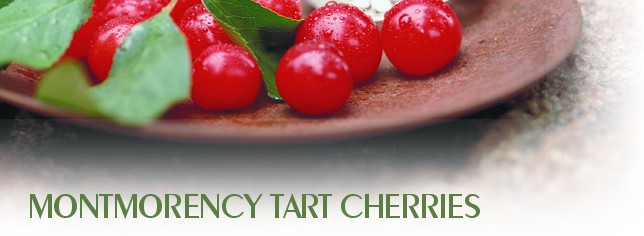
Response to Dr. Barrett, QuackwatchResponse to Dr. Barrett, Quackwatch, whose comments were made in response toA Federal Blight for Cherry Farmers by David E. Gumpert June 28, 2006 Cherry growers are not looking for any "sympathy," nor did the FDA say that the growers were making false claims. Nor is this an issue of selling a product that would otherwise not be manufactured or sold, or that would be sold at a lower price if it had not been discovered that tart cherries have dramatic, objective and unambiguous health benefits. The unspoken assumption by some who make negative comments - that the FDA or the pharmaceutical corporations are the only authorities on this subject, as contrasted with the growers who are presumed to be hayseeds trying to turn a quick buck by questionable means, is wholly false and rests on complete ignorance of the subject. The reverse is actually true, as even the most minimal investigation would show. The research and the science is wholly on the growers' side on this issue, and no evidence has been brought forward to contradict what the growers are saying, nor that would demonstrate any danger to the public. That is because it would not be possible to prove that cherries are dangerous, nor would it be possible to negate or dismiss the body of decades of research upon which the statements of potential health benefits of tart cherries rests. Tart cherries score extremely high in anti-oxidants and anti-inflammatory compounds and in melatonin. The connection between those natural compounds and health benefits is solidly established. Are tart cherries some miracle cure or magic bullet? Of course not, but the growers are not claiming that. Are promises being made about health results from tart cherries? No. Are cherries guaranteed to be effective for anything? No, but then either are drugs. Have thousands of people reported the expected results the research would suggest - reduced inflammation? Yes. Is this consistent with the body of research? Yes. Are cherry growers stating anything beyond these indisputable facts? No. Let's see if we can gain an understanding of the growers intentions and goals so that we can put this problem into some intelligent context. The goals are these: support for the family farmers and the farming communities; support for public health; and building public support for research about the connections between diet and health. All of these are long term goals, that first and foremost are for public benefit, not for short term profit goals. This often means turning down lucrative sales when they would violate one of these three commitments. The commitment of the growers: first, support the small family farmers who are growing the cherries. This is best achieved by the growers selling directly to the public, since wholesale prices for most commodities have fallen perilously close to the costs of production. Selling tart cherry juice concentrate is an excellent way for the growers to get a fair price while the consumers get a better value and better quality. The USDA and all of the growers cooperatives and marketing boards have been urging the growers to develop value added products and direct-to-retail marketing programs, and the cherry growers, while a very small sector of agriculture and consisting entirely of small-scale family growers, nevertheless succeeded at developing a trail-blazing program that is being emulated by family growers around the country. It can only be a good thing to create and support programs that save the last remnants of American family farming while at the same time giving consumers a better price and better quality. The growers did not seek out nor dream up some wild claims, they shared with the public an exhaustive body of rigorous research about potential benefits of tart cherries, and other fruits. This came to the growers, much of it from public agencies and universities, the growers did not go looking for it for marketing or sales reasons. If anything, the growers are extremely conservative and cautious, and it took much prodding by researchers and agencies before they started sharing research results at all with the public. With most commodities only a tiny fraction of the retail price of food products goes back into the farmer's hands. Direct-to-retail programs rectify this, and represents an unambiguous social benefit. Tart cherries are not widgets that can be cranked out on demand to make a quick buck on the latest health fad. It takes a massive investment by small producers. It takes 8 years for a new tree to come into bearing. It takes a lifetime commitment and hard work to grow cherries. One negative weather event can set a grower back years financially. An insufficient - dramatically insufficient - share of the revenue from produce goes back to the people with the most investment, the largest commitment, and the most risk - the families who are actually growing food. If a fair return does not go back to the grower, there will be no fruits and vegetables grown in the US. This is a very real crisis as growers are buffeted by international market forces and the control of the food supply by a smaller and smaller number of very powerful corporate agri-business players. The second consideration is that the product, which is limited by the number of Montmorency tart cherry trees in the ground, as well as the vagaries of weather, has the maximum benefit to the public. Thousands of people have reported life-changing and dramatic objective benefits from including tart cherries in their diets. These are not "true believers" in alternative health cures, they are everyday people, many of them skeptical and many professional people from the health care industry including physicians, nurses, researchers and other medical personnel. These are people who had tried every type of medication and treatment for gout and arthritis. By merely changing their diet to include tart cherries, they experience increased mobility and decreased pain. All of the extensive research on the anti-inflammatory compounds found in fresh fruit suggest that this would be possible. However,. For the person who is getting relief it is more than a suggestion, it is a fact. This is not some quack cure, this is a 100% fresh natural fruit product priced below what people pay for equivalent juices in the super market. There are not enough cherries to put tart cherry juice concentrate on every super market shelf in the country, nor would we want to do that regardless of financial incentives, and hardly a week goes by that we don't turn down a lucrative offer from some corporation. This is because we want the limited product to go to those for whom it can do the most good. There are more important things than turning a quick buck. The ethic of farming is an ethic of service to the public. If people can get healthier by eating fresh fruit and fresh fruit products - as the USDA and thousands of research projects say that they will - then we want people to experience that improved health. People don't grow food to get rich, they grow food to serve the public. With an increasingly spoiled and well fed upper middle class in this country, 3-4 generations removed from the farm, this may seem hopelessly old-fashioned and naive, and so be looked at with cynicism. But I can assure you that the traditional ethic of public service is alive and well among family growers. The work is too hard, the risks too great, and the return to small for anything less. The third commitment is to generating public support for research about the role that nutrition plays in good health. Tart cherries are not some magic bullet, and many of the lessons learned form tart cherries can be applied to other commodities. Tart cherries are a primitive fruit, a brightly colored fruit, a tart fruit, and a fruit grown in northern latitudes. All of these factors seem to be associated with higher nutrition levels. In addition, tart cherries, due to their perishability and softness are harvested in such a way that may lock in nutrition levels. The combination of these factors, none of which were intentionally developed to create some wonder product that could be hustled on the market, may explain why tart cherries score highest in ORAC values and melatonin levels, and that could explain why thousands of people get dramatic objective positive heath results from consuming tart cherries. More studies are needed - not just on tart cherries, but on potential health benefits of all fruit and vegetables. But of course we should keep in mind lemons were curing scurvy 150 years before we could "prove" that they could. Had that been discovered today, the FDA would be forcing lemon growers to remain silent about that if the same rationale were used that was applied to tart cherry growers. also see:
Why is the FDA Picking on Cherry Growers? |